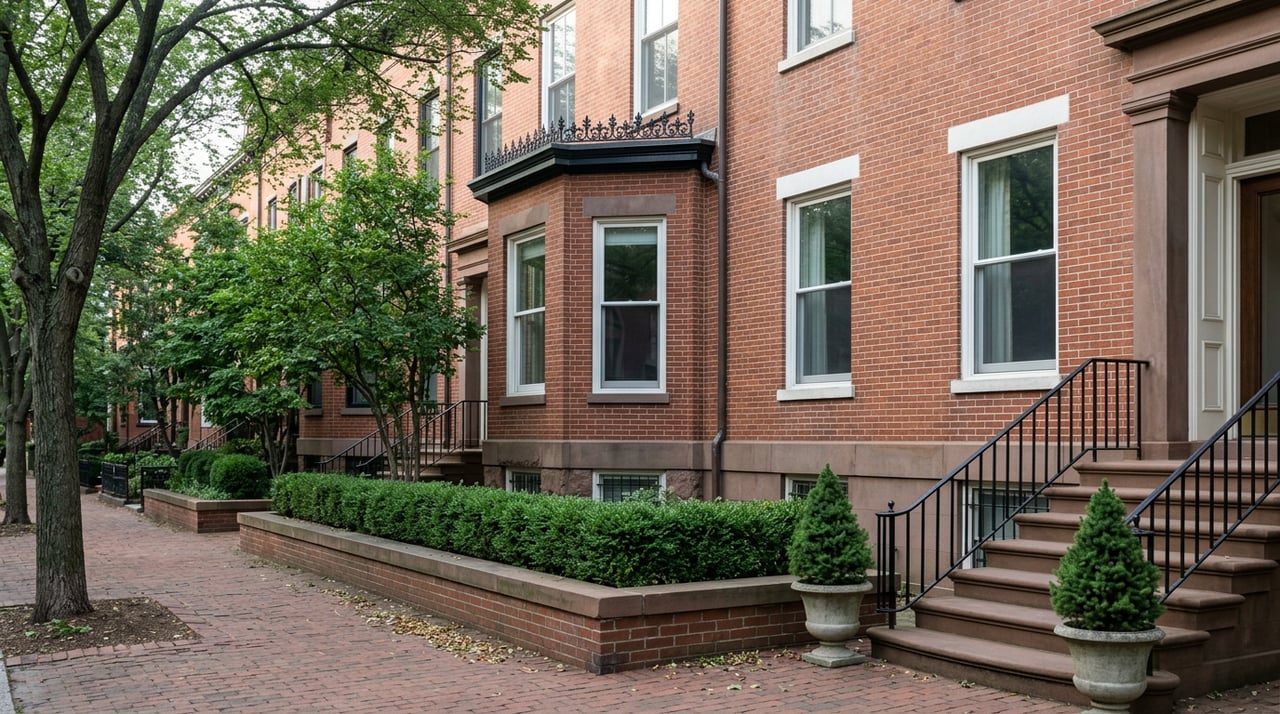
A homeowner in the McIntire Historic District called her agent last spring with a strange question. She'd heard, secondhand, that a previous owner believed the house had a presence in the back bedroom. Nothing dramatic. No history of tragedy, no police record, just decades of neighborhood talk that had drifted down to her the way old stories do in a city built on old stories. She wanted to know if she had to put that in writing before she sold.
The honest answer surprised her. In Massachusetts, she does not.
What the Law Actually Says
Massachusetts General Laws Chapter 93, Section 114 covers what the statute calls a psychologically impacted property, and it draws the line in plain language:
The fact or suspicion that real property may be or is psychologically impacted shall not be deemed to be a material fact required to be disclosed in a real estate transaction.
The statute goes further and spells out what counts as psychologically impacted. It names three categories: a former occupant suspected of having HIV or AIDS, a property that was the site of a felony, suicide, or homicide, and a property that has been the site of an alleged parapsychological or supernatural phenomenon. None of the three has to be disclosed under Massachusetts law. The seller and the listing agent are both protected. No buyer can sue later for failing to be told.
That second clause is the one that matters most in this city. Salem's identity runs through the 1692 witch trials and every October Haunted Happenings event that follows from it, and the state legislature, whether by design or coincidence, wrote a law that speaks directly to it. A house near the Witch House on Essex Street or a townhouse in the McIntire Historic District can carry generations of ghost stories, and none of it is a legal problem for the person selling it.
The Carve-Out Cuts Wider Than Ghosts
What tends to surprise people is not the paranormal part. It's what got grouped in with it. The same sentence of law that frees a seller from disclosing a haunting also frees them from disclosing that the house was the site of a felony, a suicide, or a homicide. A death from natural causes was never a material fact to begin with. This statute goes further and says a violent one isn't either, at least not as a matter of legal obligation.
There's one hard limit built into the same section. The law protects silence, not deception. If a buyer asks a direct question, the seller and the agent cannot lie. They can decline to volunteer information, but once someone asks, "was there ever a death in this house," the honest answer is required. Massachusetts calls this the caveat emptor standard for psychologically impacted property, and it means the burden of asking sits with the buyer.
Why Salem Agents Tend to Disclose Anyway
Here's where the law and the practice diverge, and it's worth sitting with why.
Salem's housing market moves fast. Over the three months ending in June 2026, homes here sold in around 21 days on average, with buyers submitting close to three offers per home and many sales closing at or above list price. A seller in that kind of market doesn't get many chances to reset a deal that falls apart. If a buyer's inspector, a curious neighbor, or an old newspaper archive surfaces a property's history after an offer is accepted, the deal doesn't just get harder. It can collapse entirely, and the seller is back on the market having lost weeks in a window where every week matters.
That risk is why the practical norm among Massachusetts agents runs ahead of what the statute requires. Many local agents raise a known stigma with a buyer once an offer is on the table, after checking with the seller first, rather than waiting to see if the question comes up. It isn't a legal duty. It's a transaction-management decision. In a market where homes are moving quickly and buyers are competing hard enough to waive contingencies, an agent who surfaces the issue early keeps the deal on stable ground instead of letting it wobble in week three of a four-week closing.
That's the real lesson buried in this statute for a Salem seller. The law gives you the right to stay quiet. The market gives you a reason to speak first anyway, because the cost of a buyer finding out on their own after they've already emotionally and financially committed is almost always higher than the cost of a calm conversation before they sign.
What This Means If You're Selling Near Salem's Historic Core
If your home sits inside a neighborhood with real history behind it, whether that's a colonial on Federal Street or a condo conversion near Derby Square, a few things are worth doing before you list.
- Ask your agent directly whether they know of anything in the property's documented past that a buyer might raise. You want to hear it from your own team first, not from a buyer's attorney during due diligence.
- Decide, with your agent, whether to get ahead of a known issue in the listing conversation rather than waiting for a question. This is a judgment call, not a legal requirement, and it depends on how material the history actually is.
- Keep your answers honest if asked directly, in writing or in person. The protection in Chapter 93, Section 114 only covers what you don't volunteer. It does not cover a false answer to a direct question.
- Remember that this statute covers psychological impact only. It has nothing to do with your separate, real obligations around lead paint disclosure or a Title V septic inspection, which remain required regardless of the property's history.
None of this changes what your house is worth on paper. What it changes is how smoothly the sale goes from accepted offer to closing table, which in a market moving this fast is often the difference between a deal that holds and one that doesn't.
A Few Questions Sellers Actually Ask
Does this law only apply to houses, or does it cover condos too? The statute applies to real property generally, so a condo unit in a converted historic building falls under the same rule as a single-family home. If the building itself carries a documented history, the same disclosure standard applies to whoever is selling a unit inside it.
If a buyer's home inspector finds nothing physically wrong, can they still back out over a history they learn about later? They can walk away from most deals during a standard contingency period for almost any reason, including discomfort with a property's past. What they generally cannot do after closing is sue the seller purely for not having volunteered a psychologically impacted fact, since the statute specifically shields sellers and agents from that kind of claim.
Does a seller have to disclose if a previous listing mentioned the history and it was later removed? The statute protects the seller's silence, not the accuracy of old marketing materials. If a prior listing made a claim about the property's history, current sellers and agents still can't misrepresent facts if asked directly, regardless of what earlier listings said.
If you're weighing how to handle a property's history in Salem, whether it's a rumor that's followed a house for decades or something more documented, that's exactly the kind of question worth working through with someone who reads contracts for a living before they read listings. Tyson Lynch spent years practicing law before shifting into North Shore real estate full time, and this is the kind of transaction detail that background was built for. Get your instant home valuation or schedule a consultation to talk through what your Salem property's specific history means for how you list it.